
CPSC's latest policy has been significantly relaxed! CBP cancels automatic return and pre-blocking, strengthens post-clearance checks.
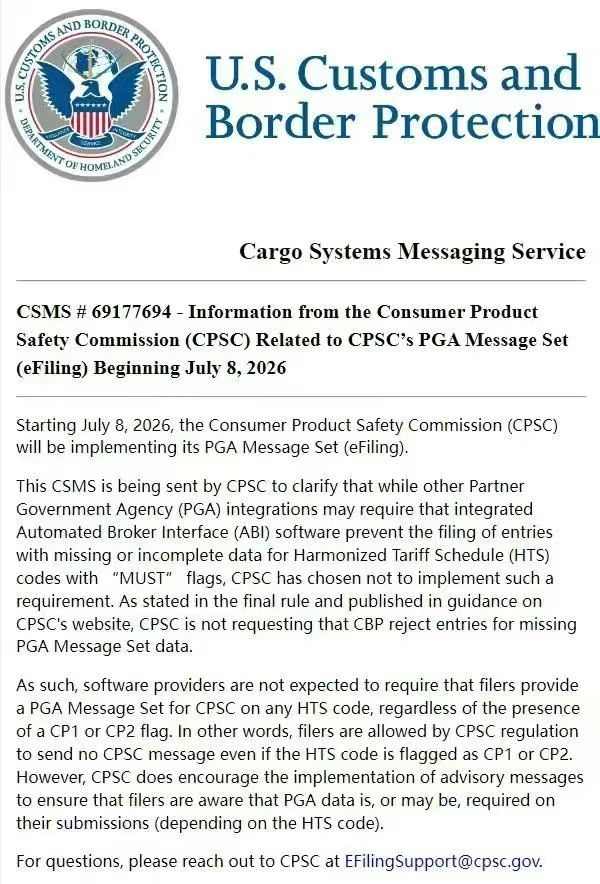
Major Policy Relaxation by CPSC! CBP Cancels Automatic Returns and Pre-Clearance Interceptions, Post-Clearance Inspections Fully Enhanced (Official Interpretation of CSMS #69177694)
Recently, the US Consumer Product Safety Commission (CPSC) released a significant policy adjustment, which, combined with the official announcement from Customs and Border Protection (CBP) in CSMS #69177694, has significantly changed the enforcement methods for imported consumer goods. This adjustment is both beneficial and presents new compliance challenges for Chinese exporters.
In this bolg, we will combine official announcements and practical customs clearance experience to provide a detailed explanation of the core content, impact, and coping strategies of the new policy, helping you avoid unnecessary inspections and return risks.
I. What are the core changes in the CPSC policy adjustment?
According to CSMS #69177694 and supporting customs regulations, the main changes are as follows:
1. Cancellation of CBP automatic return and pre-detention mechanisms
Previously, the CPSC data system was highly integrated with CBP. If missing or inconsistent information such as Product Safety Certificates (CPCs) or test reports was detected, automatic return or detention of goods could easily be triggered at the port. Now, this "pre-detention" mechanism has been cancelled, significantly reducing the probability of goods being directly returned at the port.
2. Strengthening Post-Clearance Inspections
While pre-clearance checks have been relaxed, the CPSC and CBP will shift their focus to risk-oriented inspections after customs clearance. This means that while goods may be easier to import, the risk of being randomly inspected, required to submit supplementary documents, or even fined after entry has actually increased.
3. Declaration Obligations Not Eliminated
Officials have clearly emphasized that this does not exempt importers from declaration obligations. Importers must still accurately fill in relevant CPSC information (including product category, CPC certificate, test reports, etc.) when declaring goods. Omissions or errors will actually increase the probability of being randomly inspected.
In short: the threshold has been lowered, but supervision has not been relaxed; the focus has shifted from "import control" to "post-clearance accountability."
II. What does this policy mean for Chinese exporters?
Benefits:
1. Customs clearance speed is expected to accelerate, especially for goods with sufficient compliance preparation, significantly reducing port delays.
2. It reduces unnecessary return shipping costs caused by automatic system judgments.
3. It is more favorable for sellers making small-batch, multi-batch FBA replenishment shipments.
Risks and Challenges:
1. Post-clearance inspections are strengthened. If selected for inspection, complete compliance documents (CPC certificate, third-party test reports, product labels, etc.) must be submitted quickly.
2. Incomplete or non-compliant documents may result in product recalls, fines, or even being blacklisted.
3. Omitted declaration information will be a significant trigger for inspections, with higher risks than before.
III. Practical Response Recommendations (Essential Reading for Exporters)
1. Prepare a Comprehensive Compliance Documentation System in Advance:
- A valid CPC Certificate (Children’s Product Certificate) must be prepared for each product.
- Retain complete third-party laboratory test reports (ASTM, CPSIA, etc. standards).
- Ensure product labels, packaging, and instructions comply with CPSC marking requirements
2. Accurate Customs Declaration:
- CPSC-related fields must not be left blank in documents submitted to freight forwarders or customs brokers.
- Using a professional freight forwarder or logistics company is recommended; they typically have standard CPSC declaration templates.
3. Establish a Robust Record-Keeping System:
- All compliance documents should be retained for at least 5 years for quick verification after customs clearance.
- Establishing a digital file system, categorized and managed by SKU, is recommended.
4. Choosing a Reliable Logistics and Customs Clearance Partner
- Selecting a logistics company familiar with CPSC rules and with extensive experience on the China-US route can significantly reduce risks.
- Zhonghe Logistics has a mature compliant customs clearance process and can provide clients with end-to-end support from test reports to declarations.
5. Continue to Monitor Official Updates
- Regularly check the CPSC website and CBP CSMS announcements.
- It is recommended to join relevant industry groups or follow professional logistics media to stay informed about policy developments.
IV. Frequently Asked Questions
Q: Does the new policy mean that CPSC certification is no longer required?
A: Absolutely not. The obligation to obtain product safety certification has not been cancelled; only the enforcement method has changed from pre-approval to post-approval.
Q: What are the consequences of omitting declaration information?
A: It will significantly increase the probability of being inspected. Once inspected, you may need to provide supplementary documents, pay additional fees, or even face penalties.
Q: Will small-batch FBA shipments be significantly affected?
A: The impact is relatively small, but it is still recommended to prepare documents according to standard procedures to avoid losing more than you gain.
V.Conclusion:
This policy adjustment by the CPSC is a typical example of the shift in US consumer goods import supervision from "strict import" to "strict supervision." For Chinese export companies, compliance is always the best protection.
Zhongheyun International Logistics will continue to monitor the latest policies from CPSC, CBP, and other organizations, providing clients with professional compliant customs clearance, test report coordination, and FBA first-leg services. If you have goods about to be shipped to the United States, please contact our company. Together, we will ensure that your goods arrive safely, compliantly, and quickly.