
US and China Advance $30 Billion Reciprocal Tariff Cuts Ahead of September 24 Meeting
On September 9, 2026, the Office of the United States Trade Representative (USTR) released remarks by U.S. Trade Representative Jamieson Greer from an interview with the Financial Times News Briefing. Greer said Washington and Beijing are using a jointly established mechanism — the Board of Trade — to identify non-sensitive imports and exports that can support more balanced bilateral trade.
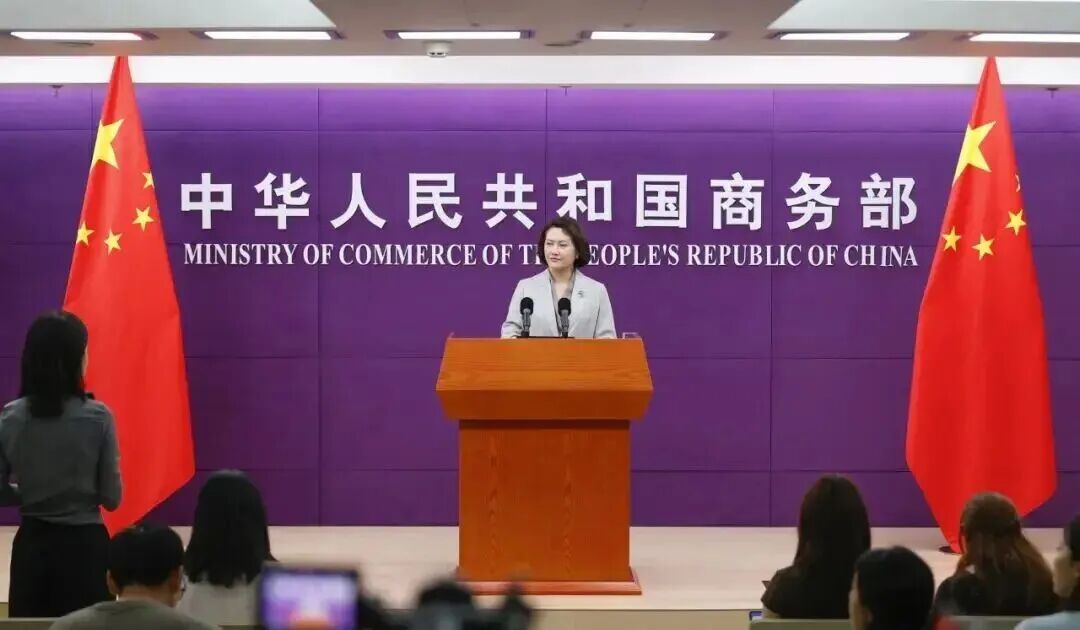
The same week, China’s Ministry of Commerce confirmed that the two sides are still working out the details. At a regular press briefing on September 10, spokesperson Huang Ling said Chinese and U.S. economic and trade teams are implementing the consensus reached by the two heads of state in Beijing and are consulting on a reciprocal tariff-reduction framework covering about $30 billion on each side, with the aim of putting it into effect as soon as possible.
What Greer Said
According to the USTR readout, Greer described the Board of Trade as one of the mechanisms set up with China. He said U.S. and Chinese counterparts are now identifying a set of non-sensitive goods — on both the import and export sides — where the two countries can expand more balanced commerce.

That work is expected to produce a first package of results around September 24, when President Donald Trump and President Xi Jinping are scheduled to meet in Washington. Greer has indicated that the public should be able to see at least part of the outcome around that date. The date is therefore the clearest near-term window for an announcement — not yet a guarantee that a full, final product list will be published on that single day.
USTR is the Trump administration’s lead agency for trade negotiations and trade policy. Greer has generally been cautious about previewing tariff moves, which is why markets and exporters are treating his comments as an official signal rather than speculation.
The $30 Billion “Reciprocal” Package
The core idea is a matched arrangement: each side would lower tariffs, or otherwise ease market access, on a comparable basket of goods valued at about $30 billion — and potentially more.
In practical terms, that would mean tariff relief on roughly $30 billion of Chinese goods entering the United States, with China offering equivalent treatment on a similar value of U.S. goods entering China. Officials on both sides have previously said products agreed by both governments could move to most-favored-nation (MFN) rates, or even lower.
This is not a comprehensive free-trade deal. It is a targeted package of “non-sensitive” goods, designed to show progress without reopening the most contested areas of the relationship, such as semiconductors, electric vehicles, or other national-security-restricted items.
China’s Latest Response
At the September 10 briefing, a reporter asked about progress on the $30 billion reciprocal tariff-reduction framework previously discussed by the two sides.
Huang Ling replied that the Chinese and U.S. economic and trade teams are earnestly implementing the consensus from the Beijing meeting of the two heads of state, are consulting on the $30 billion reciprocal tariff-reduction framework, and are working for early implementation.
That statement is consistent with earlier MOFCOM comments after the May 2026 Beijing summit, when China said the two sides had agreed in principle to discuss reciprocal cuts on products of equivalent scale, starting at $30 billion or more on each side.
How Deep Could the Cuts Go?
On the U.S. side, the main target is widely expected to be additional Section 301 tariffs first imposed in 2018. Those duties generally range from 7.5% to 25%, on top of ordinary MFN rates. If selected products are moved to MFN treatment — or below — the duty reduction would be material for importers.
USTR has already run a public-comment process to identify candidate goods that are sufficiently non-sensitive and economically useful. The United States is now discussing the specific list with China. No official, line-by-line schedule has been released.
Product Categories Most Often Cited
The final list is still under negotiation. Trade-policy analysis and industry comments have most often pointed to the following candidate groups:
- Lower-end consumer goods: apparel and footwear, household products, toys, holiday decorations, and bags. These are widely viewed as a priority area if the goal is to ease household costs.
- Light industry and daily-use items: selected textiles and basic housewares.
- Other non-sensitive goods: some non-critical industrial parts, selected medical consumables, and certain energy-related products that do not raise security concerns.
Reporting ahead of the September 24 meeting has also pointed to possible U.S. interest in lower Chinese duties on American energy and agricultural exports, and possible U.S. relief on selected Chinese manufacturing inputs. Until an official schedule is published, companies should treat these categories as likely — not confirmed.
Why the Timing Matters
Since 2025, U.S. tariffs on trading partners have risen to levels not seen since the 1930s. The administration has argued that higher tariffs would support domestic manufacturing and jobs. The manufacturing employment picture has been mixed, and household costs remain politically sensitive as the November midterm elections approach.
Voter concern over inflation, energy prices, groceries, healthcare, housing, and utilities is one reason Washington has an incentive to show tangible relief on everyday goods. A limited, reciprocal cut on non-sensitive products lets both sides claim progress while leaving the harder strategic disputes for later.
What Exporters and Importers Should Do Now
September 24 is the date to watch, but implementation — product codes, duty rates, effective dates, and any remaining conditions — will matter more than the headline. Companies that ship the candidate categories above should:
- Map current HTS/HS codes and the stacked duties now applied, including Section 301 and any other additional tariffs.
- Prepare two cost scenarios: current rates versus MFN or reduced rates on a $30 billion basket.
- Watch official notices from USTR and China’s Ministry of Commerce, not secondary summaries alone.
- Avoid changing contracts or pricing solely on the expectation that a full list will appear on September 24.
The framework is real, and both governments say they want it implemented soon. The product list, the depth of the cuts, and the start date are still being negotiated.