
Vincent Thomas Bridge Closure: Impact on Port of Los Angeles & Long Beach Drayage in 2026–2028
Vincent Thomas Bridge Closure: Impact on Port of Los Angeles & Long Beach Drayage
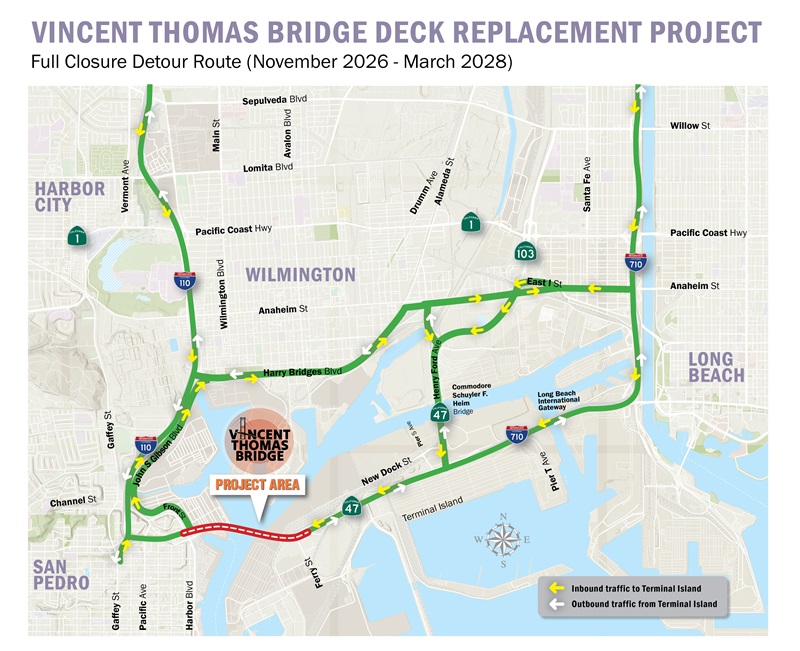
According to the latest announcement from the California Department of Transportation (Caltrans), the Vincent Thomas Bridge will be fully closed starting November 7, 2026 (local time) for a major bridge deck replacement project. The closure is expected to last approximately 16 months, with reopening targeted for early March 2028.
Why This Bridge Matters
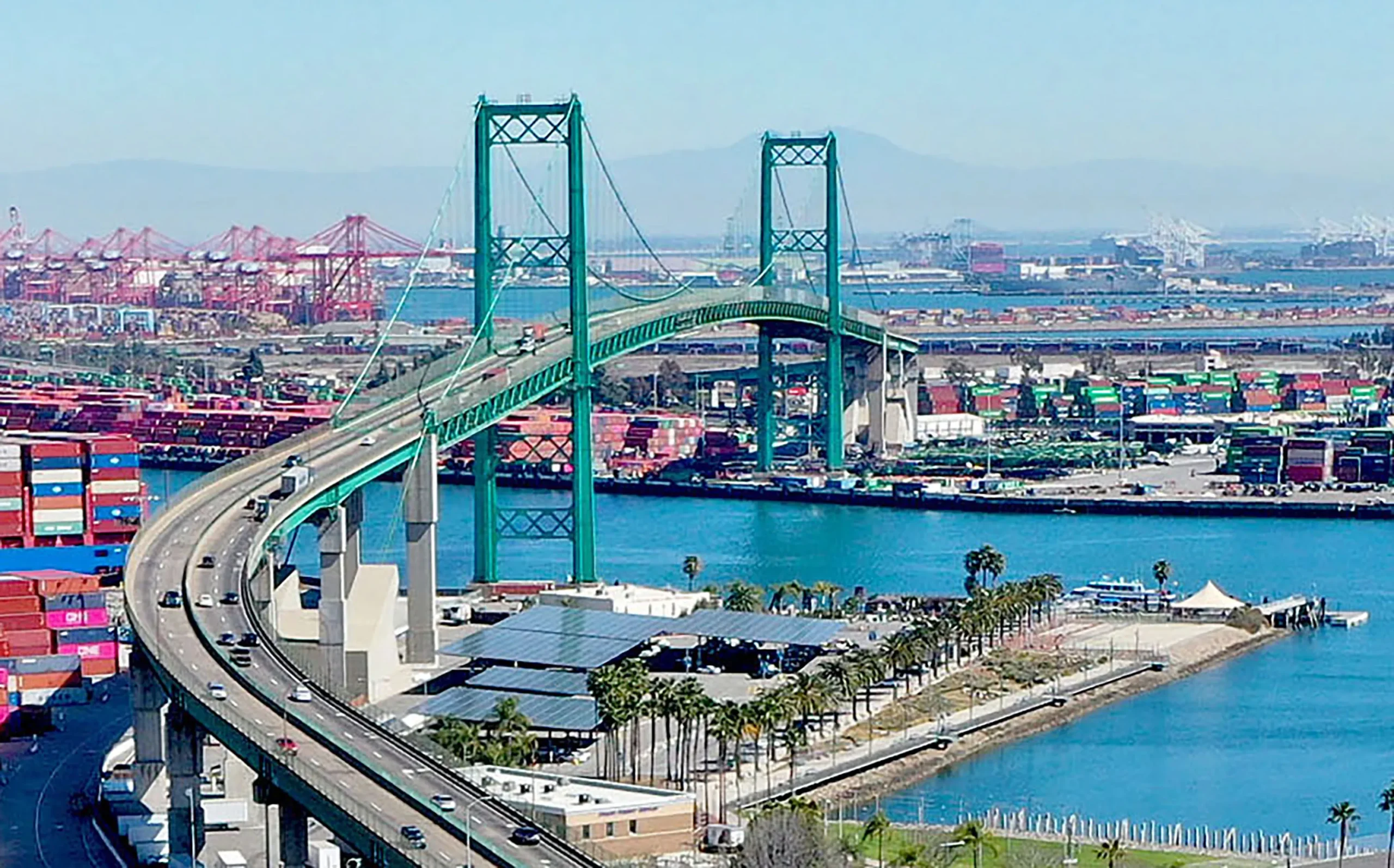
The Vincent Thomas Bridge connects the port terminal area with San Pedro and serves as a critical link to Interstate 110. It is one of the main access routes for freight and employee traffic serving both the Port of Los Angeles and the Port of Long Beach.
Caltrans data shows the bridge carries roughly 53,000 vehicles per day, of which heavy trucks account for about 8.8% — approximately 4,700 port-related trucks daily.
Current Port Congestion Background
Even before the closure, both ports have been experiencing elevated container dwell times amid record volumes:
- September average truck dwell time: 3.18 days (up from 2.95 days in August)
- Rail container average dwell time: 7.19 days (up from 6.75 days)
- Port of Los Angeles September throughput: 1.0427 million TEU (record month)
- Port of Long Beach September throughput: 997,200 TEU (also a record)
Expected Operational Impacts
Once the bridge closes, port-related trucks will be forced onto alternative routes. Potential consequences include:
- Longer transit times between terminals and warehouses or distribution centers
- Delays in container pickup, warehouse unloading, and empty container return
- Disruption to subsequent appointment schedules
- Higher risk of additional costs for cargo with tight free time or warehouse appointments
- Possible extension of chassis and truck utilization time if return locations or receiving windows change
Caltrans has stated it will deploy traffic control personnel at 18 key intersections and increase enforcement on heavy trucks to manage the detour traffic.
Recommendations for Importers and Forwarders
- Confirm drayage routes and carrier capacity in advance for shipments moving through LA/LB terminals after early November 2026
- Build extra buffer time into warehouse appointments and free time planning
- Monitor terminal appointment availability closely, as congestion may increase during the initial transition period
- Coordinate empty container return locations early, as changes can further affect turn times
- Consider flexible delivery windows or alternative inland routing where possible
The Ports of Los Angeles and Long Beach remain the primary gateways for China–US West Coast cargo. While the bridge closure will create temporary challenges for local drayage, early planning can help mitigate delays and extra costs.